
Your Garage Door Springs Are Working Harder Than You Think
Every time you open or close your garage door, the springs do the heavy lifting — literally. A standard garage door can weigh anywhere from 130 to 400 pounds, and the springs are responsible for counterbalancing all of that weight. Most homeowners in Daytona Beach use their garage door multiple times a day without ever thinking about the springs. But like any mechanical component, they wear out over time.
The problem is that most people don't realize their springs are failing until the door won't open at all — or worse, a spring snaps while someone is standing nearby. Knowing the warning signs can save you from an inconvenient breakdown and a potentially dangerous situation.
How Long Do Garage Door Springs Last?
Most standard torsion springs are rated for about 10,000 cycles. One cycle equals one full open and one full close. If your household opens and closes the garage door four times a day, that's roughly 1,460 cycles per year, which means your springs could last about seven years.
However, several factors can shorten that lifespan:
- Frequency of use: Families that use the garage as their primary entrance may cycle the door six to eight times daily, cutting spring life significantly.
- Lack of maintenance: Springs that aren't lubricated regularly experience more friction and wear out faster.
- Environmental conditions: Here in Daytona Beach, the combination of heat, humidity, and salt air can accelerate corrosion on metal springs, reducing their effective lifespan.
- Poor installation: Springs that weren't properly sized or installed from the start will fail sooner than they should.
7 Warning Signs Your Garage Door Springs Are Failing
1. The Door Feels Heavier Than Usual
Try disconnecting your garage door opener and lifting the door manually. A properly balanced door with healthy springs should lift with minimal effort and stay open about three to four feet off the ground. If the door feels extremely heavy or slams down the moment you let go, your springs are losing tension and nearing the end of their life.
2. The Door Opens Unevenly or Crooked
If your garage door tilts to one side as it opens, one of the springs may be weaker than the other or may have already broken. This uneven movement puts extra strain on the opener, the tracks, and the remaining spring, which can lead to a cascade of additional problems.
3. You Hear Loud Banging or Popping Noises
A sudden, loud bang from your garage — almost like a firecracker — is often the sound of a spring snapping. Many Daytona Beach homeowners have called us thinking someone broke into their garage, only to find out it was a broken torsion spring. If you hear this sound, do not attempt to operate the door.
4. There's a Visible Gap in the Spring
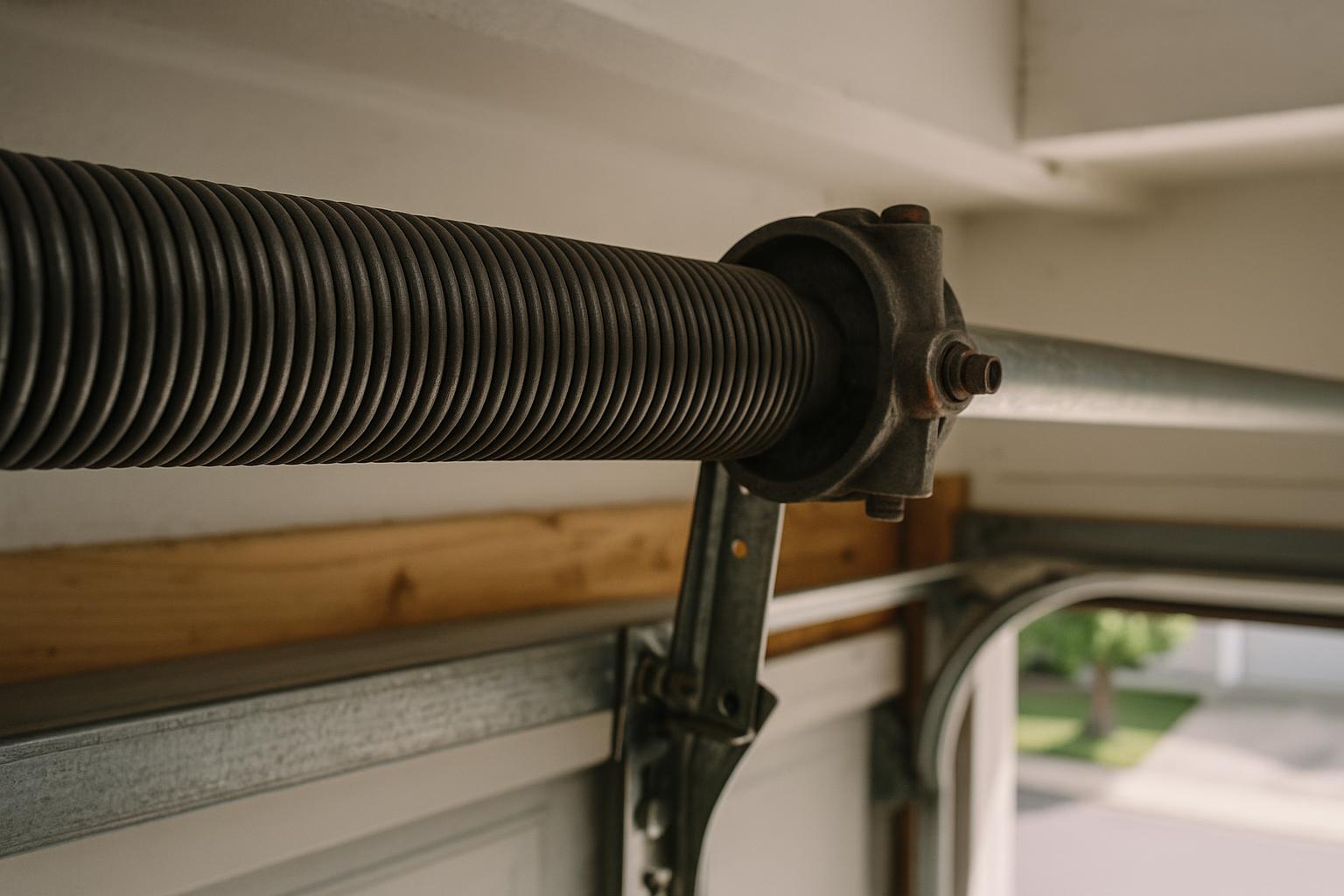
Take a look at the torsion spring mounted above your garage door. If you see a visible gap or separation in the coils, the spring has already broken. This is one of the most obvious signs, but many homeowners never look up to check.
5. The Opener Struggles or Stops Mid-Cycle
Your garage door opener is designed to work with the springs, not replace them. When springs weaken, the opener has to work much harder to lift the door. You might notice the motor straining, the door reversing partway up, or the opener shutting off entirely. Continuing to force it can burn out the opener motor, adding an expensive repair on top of the spring replacement.
6. The Door Closes Too Fast
A garage door that drops quickly when closing is a serious safety hazard. Healthy springs control the descent and keep the door moving at a steady pace. If your door is slamming shut, the springs are no longer providing adequate resistance, and you should stop using the door until it's repaired.
7. You Notice Rust or Corrosion on the Springs
Rust weakens metal and increases friction between the coils. In a coastal area like Daytona Beach, this is especially common. If your springs show visible rust or orange discoloration, their remaining lifespan is likely shorter than average. Regular lubrication with a silicone-based spray can slow corrosion, but once rust has significantly eaten into the metal, replacement is the safest option.
Why You Should Never Replace Garage Door Springs Yourself
We understand the DIY spirit, but garage door springs are one repair that should always be left to professionals. Here's why:
- Extreme tension: Torsion springs are wound under tremendous force. A spring that releases unexpectedly can cause severe injuries or even death.
- Specialized tools required: Proper spring replacement requires winding bars, clamps, and precise calibration that most homeowners don't have.
- Incorrect sizing is dangerous: Installing the wrong spring size can cause the door to behave unpredictably, creating ongoing safety risks.
- Warranty concerns: Many garage door and opener warranties are voided if non-professional repairs are performed.
A trained technician can replace your springs safely in about an hour, and the cost is far less than an emergency room visit or a damaged opener.
What to Expect During a Spring Replacement
When you call Daytona Beach Garage Door for a spring replacement, here's what the process typically looks like:
- We inspect the entire door system — not just the springs — to identify any related issues.
- We determine the correct spring size, wire gauge, and length for your specific door.
- We safely unwind and remove the old springs.
- We install new springs and wind them to the manufacturer's recommended tension.
- We test the door balance, lubricate all moving parts, and make sure everything operates smoothly.
- We check the safety features on your opener to confirm they're working properly.
The whole process usually takes under an hour, and we clean up before we leave.
Don't Wait for a Complete Failure
A broken garage door spring always seems to happen at the worst possible time — when you're running late for work, loading groceries in the rain, or trying to get your car out for an emergency. The good news is that springs almost always give warning signs before they fail completely.
If you've noticed any of the symptoms above, or if your springs are more than five or six years old, it's worth having them inspected. Catching the problem early means you get to choose when the repair happens instead of having it forced on you.
Homeowners across Daytona Beach, Port Orange, Ormond Beach, and the surrounding areas trust us to keep their garage doors safe and reliable. If your springs are showing signs of wear, give Daytona Beach Garage Door a call and we'll take care of it before it becomes an emergency.