
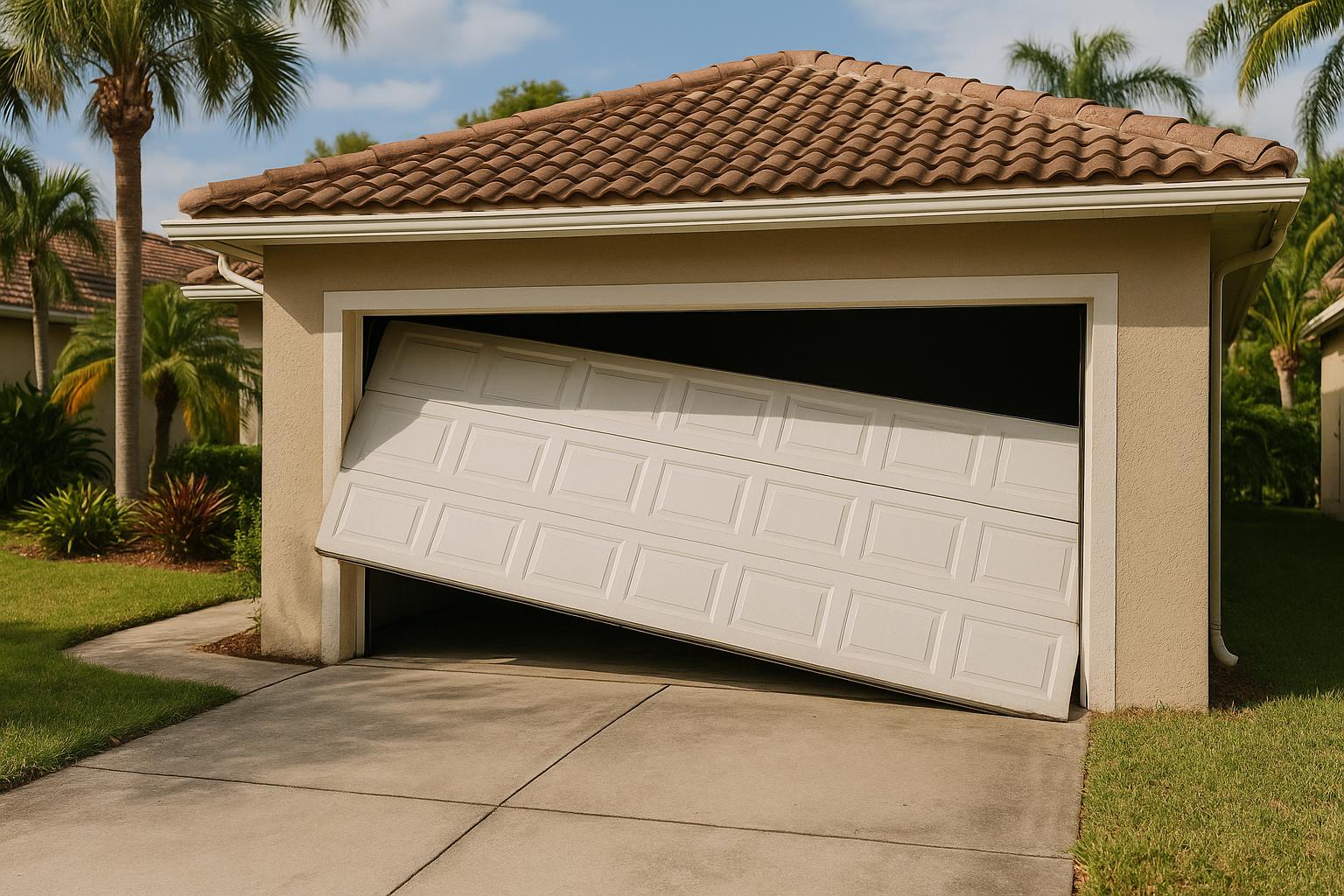
Few Things Are More Frustrating Than a Stuck Garage Door
You're running late for work, you press the button on your remote, and nothing happens. Or maybe you pull into the driveway after a long day and your garage door refuses to close. A garage door that won't open or close is one of the most common — and most stressful — problems homeowners in Daytona Beach deal with.
The good news is that some causes are simple enough to troubleshoot on your own. Others require professional attention, but knowing the difference can save you time, money, and a lot of frustration. Let's walk through the most common reasons your garage door might be stuck and what you can do about each one.
1. Check the Remote and Wall Switch
Before you assume the worst, start with the basics. If your garage door remote isn't working, try the wall-mounted switch inside the garage. If the wall switch works but the remote doesn't, you likely have a simple fix on your hands.
- Replace the batteries. It sounds obvious, but dead batteries are the number one reason remotes stop working.
- Check the range. If you have to stand very close to the door for the remote to work, the batteries may be weak or there could be signal interference.
- Reprogram the remote. Sometimes remotes lose their connection to the opener. Consult your opener's manual for reprogramming instructions.
If neither the remote nor the wall switch works, the issue is likely with the opener itself or the power supply.
2. Make Sure the Opener Is Receiving Power
Check whether the garage door opener unit is plugged in. It may sound too simple, but plugs can get knocked loose, especially if you use your garage as a workshop or storage area. Also check your home's electrical panel for a tripped breaker or blown fuse.
If you've had a recent storm — something we're no strangers to here in Daytona Beach — a power surge could have tripped the breaker or even damaged the opener's circuit board. Reset the breaker and try again. If the opener still doesn't respond, it may need professional diagnosis.
3. Look at the Safety Sensors
Modern garage doors are equipped with photoelectric safety sensors mounted near the bottom of the door tracks on either side. These sensors prevent the door from closing on a person, pet, or object. If something is blocking the sensor beam or if the sensors are misaligned, the door will typically refuse to close.
Here's what to check:
- Clear any obstructions. Move boxes, tools, bikes, or anything else that might be blocking the sensor's line of sight.
- Clean the sensor lenses. Dust, dirt, cobwebs, and even moisture from Florida's humidity can cloud the lenses and disrupt the signal.
- Check alignment. Both sensors should have a steady light (usually green). If one is blinking, it's likely out of alignment. Gently adjust the sensor until the light holds steady.
If the sensors appear fine but the door still won't close, the wiring between the sensors and the opener could be damaged.
4. Inspect the Tracks and Rollers
Your garage door travels along metal tracks on both sides. If those tracks are bent, dented, or obstructed, the door can get stuck partway or refuse to move at all.
- Visually inspect both tracks for dents, gaps, or debris.
- Make sure the tracks are properly aligned and securely fastened to the wall.
- Check the rollers for wear or damage. Worn-out rollers can cause the door to bind in the tracks.
Minor debris can be cleared out easily, but bent tracks or broken rollers should be handled by a trained technician to avoid making the problem worse.
5. Check the Disconnect Switch
Every garage door opener has a manual disconnect switch, usually a red cord or handle hanging from the opener rail. This switch allows you to operate the door manually during a power outage. If it's been accidentally engaged, the opener won't be able to move the door.
Simply re-engage the switch according to your opener's instructions, and the motor should regain control of the door. If you're unsure how to do this, your owner's manual or a quick call to a garage door professional can point you in the right direction.
6. Listen for Clues
When you press the button, pay attention to what happens — or doesn't happen.
- Motor runs but the door doesn't move: This often indicates a broken spring or a disengaged trolley. A broken spring is a serious issue and should only be repaired by a professional due to the extreme tension involved.
- Grinding or straining sounds: The door may be off-track, or there could be an issue with the opener's gears.
- No sound at all: The opener may not be receiving power, or the motor could have burned out.
These auditory clues can help a technician diagnose the problem faster when you call for service.
7. Consider the Age of Your Opener
Garage door openers typically last 10 to 15 years with proper maintenance. If your opener is approaching or past that age and you're experiencing frequent issues, it may be more cost-effective to replace it rather than continuing to repair it. Newer openers also come with improved safety features, quieter operation, and smart home connectivity — upgrades that many Daytona Beach homeowners appreciate.
When to Call a Professional
Some garage door problems are safe and easy to handle yourself. Replacing remote batteries, clearing sensor obstructions, and re-engaging the disconnect switch are all fair game. But there are situations where calling a professional isn't just recommended — it's essential for your safety.
Call a garage door technician if:
- You suspect a broken spring or cable
- The door is visibly off its tracks
- The opener's motor runs but the door won't budge
- You notice frayed cables or damaged hardware
- The door falls rapidly when you try to close it
Garage doors are the largest moving component in most homes, and the springs and cables are under tremendous tension. Attempting DIY repairs on these parts can lead to serious injury.
Keep Your Garage Door Reliable Year-Round
A garage door that won't open or close is more than an inconvenience — it's a security risk and a disruption to your daily routine. By understanding the common causes and knowing when to troubleshoot versus when to call for help, you can get your door back on track quickly and safely.
If you're in Daytona Beach, Ormond Beach, Port Orange, or the surrounding areas and your garage door has you stumped, Daytona Beach Garage Door is here to help. We offer fast, reliable service to diagnose and fix whatever is keeping your door from working the way it should. Don't let a stuck garage door ruin your day — give us a call and we'll get it sorted out.